Arkieva Supply Chain Link Blog.
Creating the link between better supply chain planning and decisions.
RECENT POSTS

Driscoll’s Not Your Average Berry!
A look at how Arkieva customer, Driscoll’s is evolving and elevating the standards for berry production.

Key Guiding Principles for Getting a Better Handle on Implementing Artificial Intelligence (AI) in Supply Chain Management
The role of Artificial Intelligence (AI) in business activities has again emerged as a hot topic for 2017 and 2018. In fact, Gartner predicts by 2021, 40% of new enterprise applications will include Artificial Intelligence Technologies, where AI and Machine Learning promise to solve a plethora of problems faced by enterprises today, from better decision making to increased efficiencies and cost savings.

3 Reasons why we’re grateful for Internet of Things (IoT) this Thanksgiving
Our world can be defined as a series of interconnections. Interpersonal, international and other relationships dictate the global economy and infrastructure and with the advent of the internet, the threshold of connectivity became limitless.

How do you create a streamlined process for analyzing what-if scenarios?
What-if analysis is not about just running software multiple times with different settings. In this week’s Supply Chain Talk
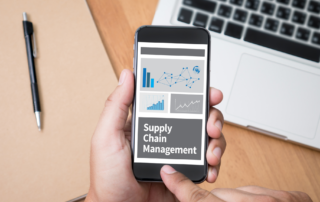
Back to the Basics: What’s the Core Purpose of Supply Chain Management?
As supply chain professionals and SCM technology enthusiasts, our conversations and discussions are often forward-looking. Sometimes, it’s essential to focus on the here and now, before looking ahead. In this post, we’ll cover some of the basics of what supply chain management entails, and why it’s a critical component in fueling supply chain innovations.

Who Should Take Ownership of Finished Product Inventory Management?
I mean who suffers directly when finished product inventory runs amuck by level, mix, or availability? Well, we all do, don’t we? After all, if we made it and can’t sell it, what have we done? Or, what if we promised it to customers but haven’t made it? Until we give finished goods velocity, no profits roll into the business meaning, no revenue (assuming when it sells, it gains velocity). Just think of the other side of the coin when it goes to the scrap heap for a write off (terminal velocity).

How to Determine the Best-Fit Plan with Supply Chain Optimization
The use of optimization in supply chain management is widespread, just not in supply planning. Regular use of optimization occurs in inventory management and demand forecasting. “Best-fit straight line” is one of the most common uses of optimization. With this method, you enter or pull into Excel (or your favorite statistics software) a set of “x values” (the independent value e.g. the number of cars in a train) and a set of “y values” (dependent value e.g. the fuel cost for each train), click a few buttons and you get a “best-fit” straight line – a slope (b1), a y-intercept (b0), a measure of goodness, and a straight line drawn through your scatter plot.

Supply Chain Talk: Is your planning data worth protecting?
Would you like advance knowledge of your competitor’s promotions? How about the production rates, or the costs that they use for measuring profitability? Just as you would welcome this type of competitive information, so would your competitors’ welcome similar information about your supply chain.

Can Supply Chain Optimization Lead to a Road Less Traveled?
An optimization model does the same; it calculates the decisions based on the stated preferences and constraints in the model. That can sometimes have the inadvertent effect of finding new pathways, a road less, if ever, traveled.