Arkieva Supply Chain Link Blog.
Creating the link between better supply chain planning and decisions.
RECENT POSTS

Discover Why Arkieva is Named As a Leader in The 2019 Gartner Magic Quadrant for Sales and Operations Planning System of Differentiation
We are pleased to announce that due to the amazing support of Arkieva customers, Arkieva has been named as Leader in the 2019 Magic Quadrant for Sales and Operations Planning (S&OP) System of Differentiation (SOD).

Q&A: How is Linde Optimizing Operations with a Supply Chain Digital Twin?
Arkieva Customer, Linde PLC, is a leading supplier of industrial gases in the world. Linde has transformed its network optimization processes by creating a digital twin of its integrated supply chain with Arkieva. I sat down with Richard Wallington, Global Head of Bulk Supply Chain at Linde to find out more.
Key Supply Chain Digital Transformation Pitfalls to Avoid
Supply Chain Digital transformation has the potential to be, for no better words, transformative; when done right, a transformation can enable your business to reap significant, and well-documented, benefits. On the other hand, Supply Chain Digital Transformation if executed poorly cost companies millions, go on for years, fail to deliver expected or any benefits, and ultimately end up costing some CEO and CIO their jobs.

Is Your Supply Chain Ready for Industry 4.0?
From the move from centralization to decentralization, a cobot world, and smart factories, Industry 4.0 is here and it’s happening fast. Are you ready?

Statistical Modeling VS Machine Learning
Sometimes statistical prediction is confused with statistical forecasting. Forecasting can be considered a prediction model but not all prediction models can be considered forecast models.

I created an Out of Stock Alerting Process with Excel. Here’s What Happened.
I experienced first-hand the limitations of automating out of stock alerts using Excel. Here’s a real-life example of the out of stock process that I created.

Demand Segmentation Starter Guide
Use this comprehensive guide to get started with your product-customer demand segmentation analysis process.
How Does a Supply Chain Planning System Aggregate and Disaggregate Data?
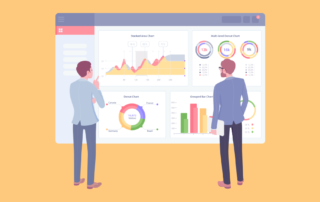
Planners in certain industries such as the consumer-packaged goods (CPG) prefer updating forecasts at an aggregate level but would also sometimes want to lock values at the detail level to prevent disaggregation to a specific combination. How is it done? A planning system is expected to present correct data to the planner at whatever level it is being looked at.

How to Measure Forecast Errors in Intermittent Demand Forecasting
Stop using traditional forecast accuracy metrics to measure forecast for sporadic demand patterns. Use this method instead.