Shutdown Days & Demand Patterns
Shutdown days are either planned well in advance or inadvertent and unwelcome manufacturing excursion- this is a factory issue, not a demand issue. The answer is simple...


Shutdown days are either planned well in advance or inadvertent and unwelcome manufacturing excursion- this is a factory issue, not a demand issue. The answer is simple...
In Part 1 of this blog, we closed with the following question: “OK, intermittent demand creates a challenge, but I still need a demand estimate, what do I do!” Below we will provide an answer, but with a different orientation that begins with the question: “what is the purpose of the demand estimate?”

Historically, most of the key planning and computational activities (models, time series, machine learning, and other analytics) that support extended supply chain management (SCM) are “deterministic models”.
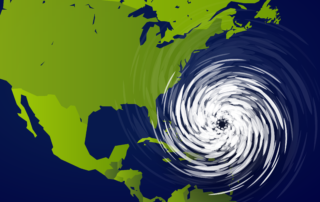
With each storm, there comes a bevy of forecasts put out by different computer models. These forecasts begin about 10 days out and change as the storm gets closer and closer. This blog tries to extract some learnings from this process of forecasting.

Scientific and system-driven Inventory Projection facilitates a quick decision-making process and enables a prompt analysis of alternative what-if scenarios. The following are the top 7 benefits of system driven inventory projection.

When trying to forecast demand for the future, it is important to understand the variability in the underlying dataset.

There is no doubt that demand segmentation can help you bring clarity to demand planning and the overall supply chain planning process and lead to far superior results in terms of various supply chain metrics. At the core of segmentation is the understanding that one size will not fit all.

Should we combine the positive numbers and the negative numbers as we approach the essential business of forecasting future demand? Let us think this through.

Sometimes statistical prediction is confused with statistical forecasting. Forecasting can be considered a prediction model but not all prediction models can be considered forecast models.

Use this comprehensive guide to get started with your product-customer demand segmentation analysis process.